A B2B founder can spend weeks building a list, writing a sequence, and setting up a send, then stare at an open rate that tells only part of the story. That frustration is common because cold email open rates still matter, but they no longer work as a clean measure of interest. In 2026, the more useful question isn't “Did they open?” but “Did the message reach a real prospect, and did it lead to a reply?”
Introduction to Cold Email Open Rates
A sales leader looking at a dashboard full of muted numbers usually wants one thing, a quick answer on whether the campaign is healthy. Open rate is often the first signal people check because it gives an early read on subject lines, deliverability, and audience fit. The trouble is that privacy features and inbox behaviour can make the number look healthier or worse than the actual engagement underneath it.
A campaign in the high 20s may be perfectly normal, while a campaign above 40% often points to stronger list quality or sharper targeting, based on the benchmarks in the research brief. That's why this metric should be treated as a directional signal, not a verdict. The practical goal is to separate real engagement from tracking noise and then decide what to fix first.
Practical rule: start with open rate, but never stop there. Pair it with bounce, complaint, and reply data before you change your copy or blame your subject line.
What Cold Email Open Rates Represent
An open rate is meant to show whether the recipient opened the email, but in practice it often shows whether a tracking pixel fired. That's a big difference. Picture mailing postcards with invisible ink that appears only when someone handles the card, except some mail carriers also reveal the message before it reaches the person.
That is why raw opens can mislead you. Apple Mail Privacy Protection can pre-load images, so the system records an open even if the recipient didn't actively read the email. Some inboxes and security tools also scan messages automatically, which creates another layer of noise. The result is simple, the number still tells you something, but it no longer tells you everything.
Read the metric as a signal, not a scoreboard
A better way to think about cold email open rates is to use them the way a mechanic uses a dashboard warning light. The light doesn't diagnose the problem by itself, but it tells you where to look next. If opens are high and replies are weak, the issue may be message quality or audience fit. If opens are low and replies are also low, deliverability or list quality may be the first thing to inspect.
That distinction matters because teams often overreact to subject lines when the actual issue is elsewhere. A tracked open can come from a real person, a privacy pre-load, or a pre-scan. So a good-looking open rate can still hide poor inbox placement, and a weak open rate can still sit alongside strong reply quality if the campaign is reaching the right people.
For list quality work, the contact data behind the send matters as much as the email itself, and email verification guidance is worth reviewing before you treat the metric as a copywriting problem.
Benchmarking Cold Email Open Rates
The cleanest benchmark in the brief comes from a 2026 cross-industry measure that reported an average B2B cold email open rate of 27.7% (Woodpecker). That same benchmark framed 40% to 60% as strong and 65%+ as elite. In plain terms, a campaign sitting near the high 20s is broadly normal, while a sustained result above 40% usually means the list, subject line, and delivery setup are all working together well.
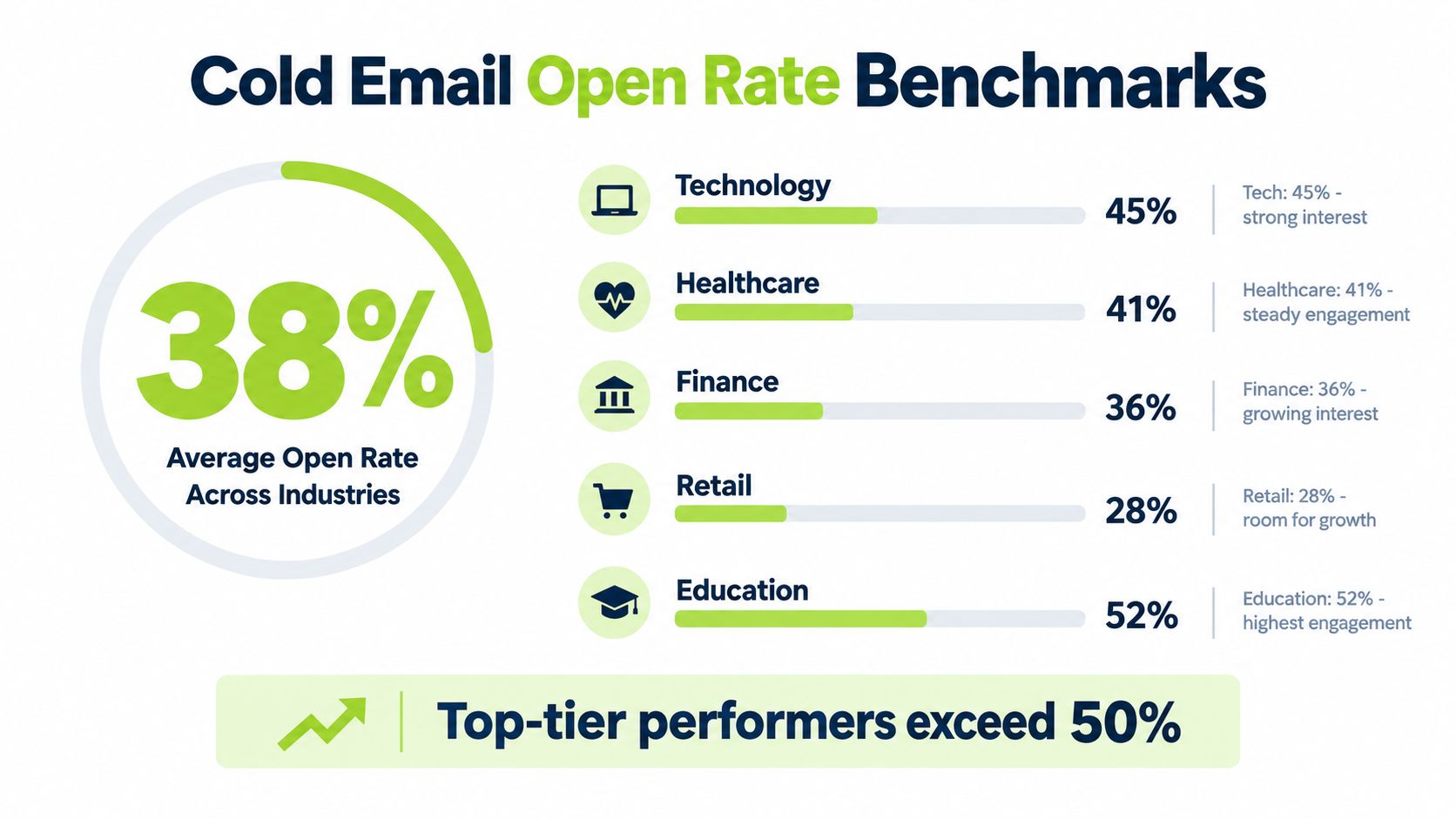
A second benchmark set in the brief makes the range feel more realistic. One large dataset reported an average open rate of 23.4% across 1 million cold emails, while another platform-level analysis found 21% (Popupsmart). That spread is a reminder that benchmark numbers shift with audience quality, deliverability, and the way opens are measured. It's also why marketers who promise effortless 40% to 60% performance are usually selling an idealised version of the market.
Useful frame: 27.7% is a practical reference point, not a guarantee. If you're below that line, look first at list quality and inbox placement. If you're above it, check whether the number is being inflated by privacy behaviour before you celebrate.
Why the benchmark range looks so wide
Different datasets reflect different sending conditions. A managed environment with better authentication and a tighter list will usually outperform a broad cold blast. The brief also notes that privacy features can inflate opens, which is why the same campaign may appear average in one platform and elite in another.
That's the value of the benchmark, it stops teams from using wishful thinking as a comparison point. If your result is in the low-to-mid 20s, you're not automatically failing. If you're in the 40% to 60% range, you're probably doing several things right. And if a campaign is reported as excellent but replies are flat, the open rate may not be telling the full truth.
Factors That Influence Open Rates
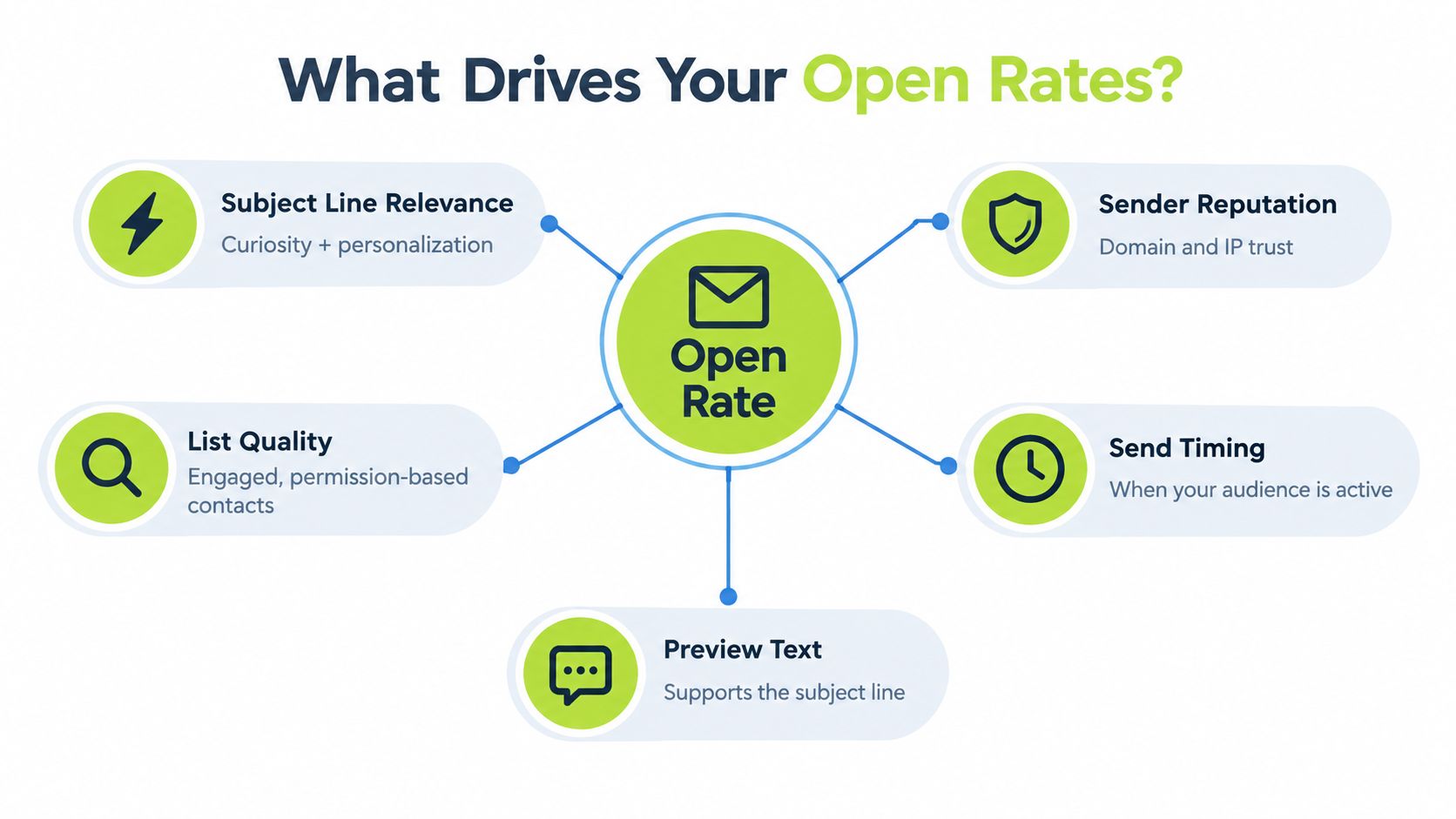
The biggest mistake teams make is treating open rate like a single-variable problem. It isn't. The subject line matters, but so do sender reputation, list quality, send timing, preview text, and the privacy systems sitting between you and the inbox. Apple Mail Privacy Protection is especially important because it can inflate opens by pre-loading images, which means the headline number can move without any change in human engagement (Prospeo).
The five levers that move the number
- Subject Line Relevance: The subject line earns the first glance. If it sounds generic, the email gets ignored faster.
- Sender Reputation: Recipients trust familiar and well-behaved senders more than new domains with sloppy sending patterns.
- List Quality: Clean, relevant contacts beat large, weak lists every time.
- Send Timing: A good message sent at the wrong time can be buried before it gets seen.
- Preview Text: The first line adds context and can rescue a decent subject line, or weaken it if it's vague.
These levers interact. A weak sender reputation can drag down even a strong subject line. A precise list can lift performance even when the copy is only decent. And if privacy pre-loading is inflating opens, your dashboard may show progress where the audience has not changed at all.
Keep the cause and the symptom separate
Low opens don't always mean bad writing. The brief notes that when a campaign drops below roughly 15%, the likelier cause is deliverability or data quality rather than the subject line. That's useful because it changes the order of operations. Fix the inbox path first, then test the copy.
On the other side, a high open rate isn't automatically proof of strong engagement. It may reflect privacy inflation or pre-scanning. That's why the metric should be read alongside replies and bounces, not as a standalone score. In practice, the best teams use open rate to decide where to investigate, then use the rest of the funnel to decide what's broken.
How to Measure Open Rates Accurately
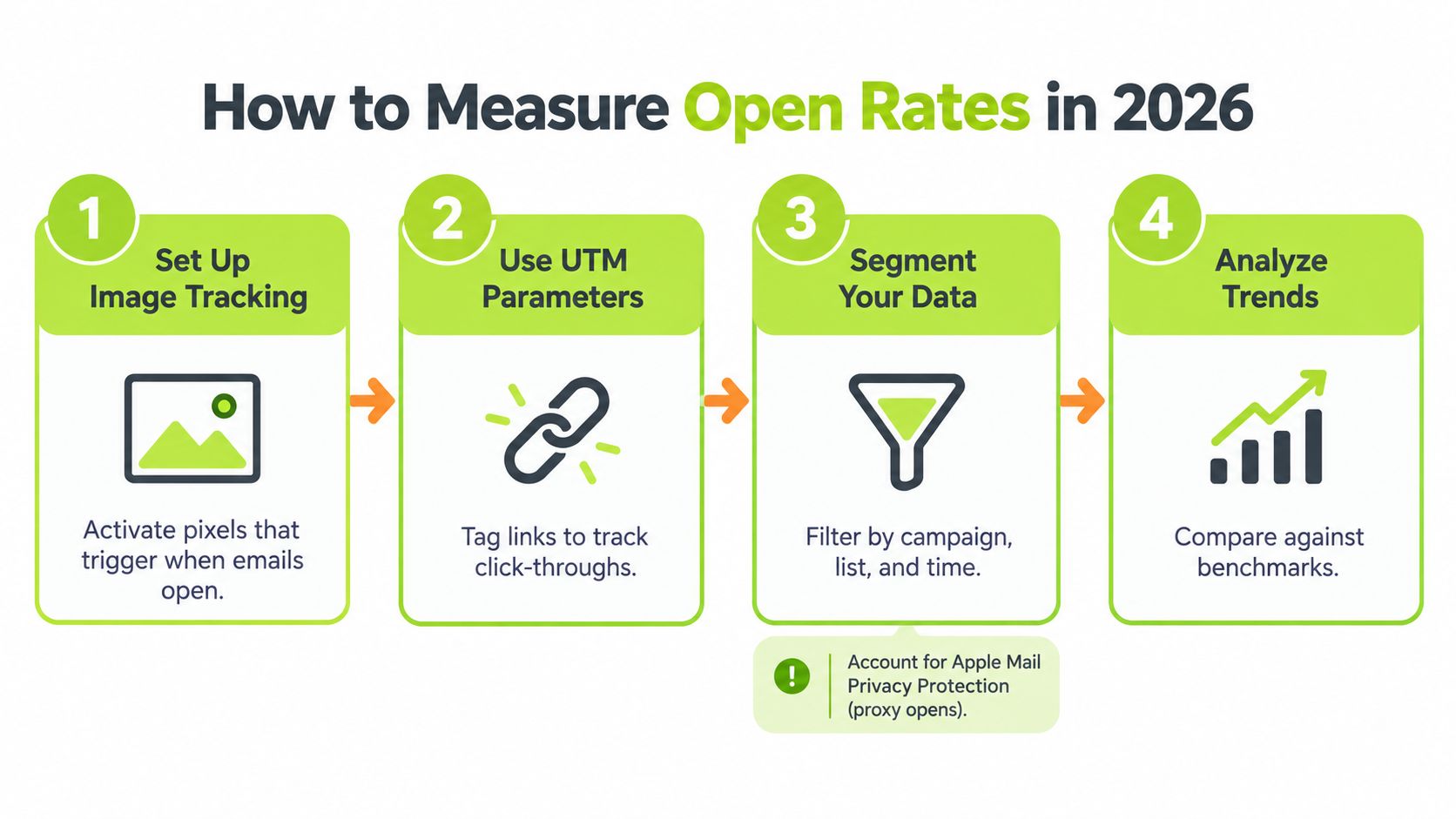
A dashboard is only helpful if the data feeding it is clean enough to interpret. That means measuring open rate as part of a small system, not as a lone metric. It also means accepting that privacy features can make some opens look human when they aren't, which is why many teams now treat the number as directionally useful rather than diagnostic (Snov.io).
A simple measurement routine
- Set up image tracking. Use it to capture opens, but remember that the pixel only proves a tracked event, not human intent.
- Tag links with UTM parameters. Click behaviour helps reveal whether interest exists beyond the open.
- Segment your data. Separate campaigns, lists, and time periods, then note that Apple Mail Privacy Protection can create proxy opens.
- Compare trends, not single sends. One campaign can be noisy. Patterns across several sends are more trustworthy.
The useful habit here is comparison. If one list opens well and another doesn't, the difference may be targeting, not copy. If the same subject line performs differently across segments, the audience is probably doing more of the work than the line itself. That's how you move from guesswork to diagnosis.
If the opens look healthy but replies are flat, don't rewrite everything at once. Check whether people are actually responding, whether complaints are creeping up, and whether your list is full of contacts who were never a real fit.
For a related operational issue, deliverability troubleshooting guidance helps separate inbox placement problems from message performance. That matters because a dashboard can't tell you whether the email landed, got filtered, or was opened by a machine-generated event.
Tactics to Improve Open Rates
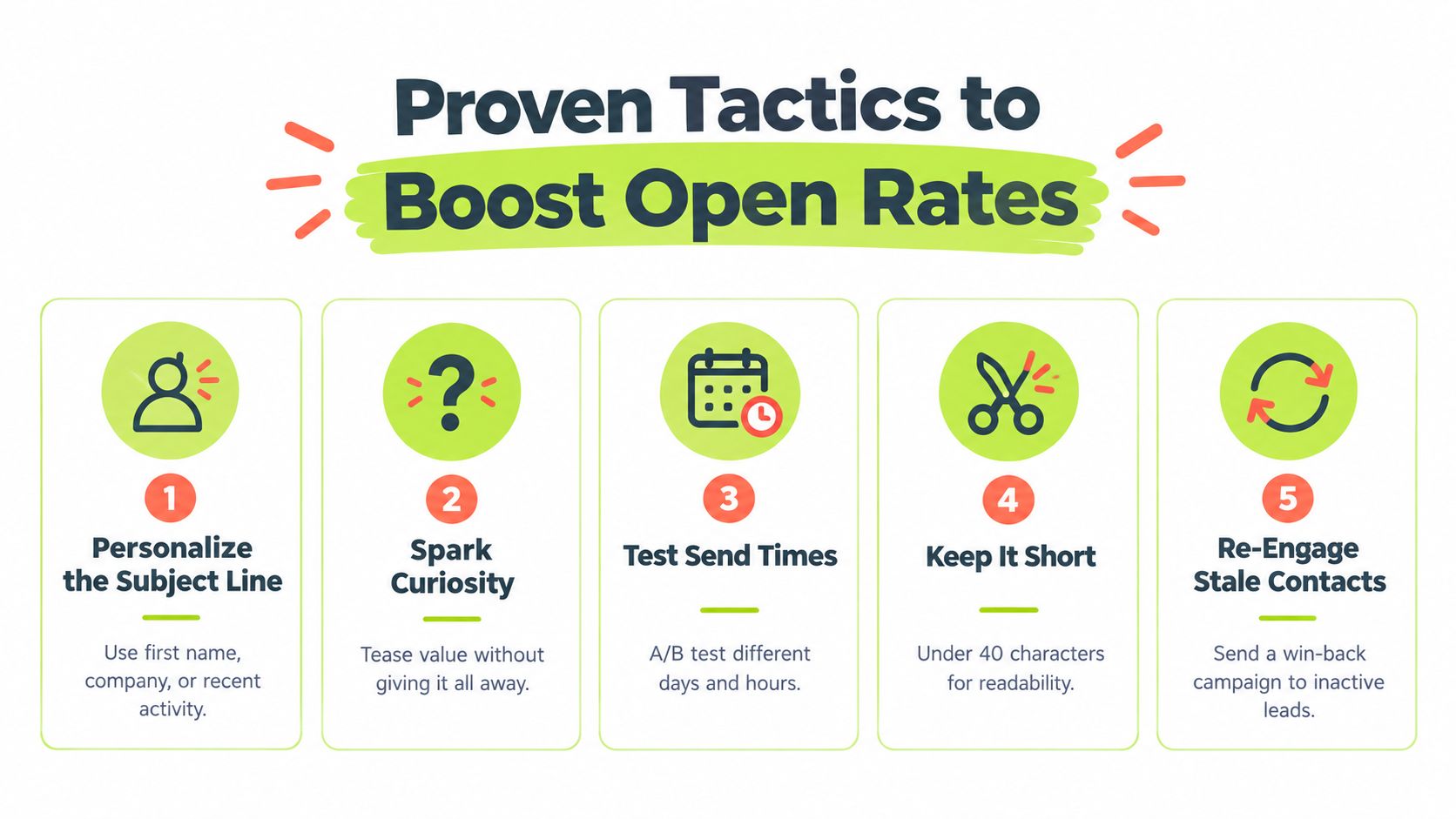
Open rates improve faster when you treat them like a traffic signal, not a verdict. A subject line can bring someone to the door, but list quality and inbox placement decide whether that door ever opens. The brief notes that smaller, highly targeted lists can reach stronger open rates (Prospeo), which points to a simple rule, precision and hygiene often matter more than clever wording.
Subject line and list moves that actually help
- Personalize the subject line. Use a first name, company name, or recent activity if it fits naturally. “Quick thought on H2 Studio” feels more specific than a generic broadcast.
- Spark curiosity. Tease the reason for opening without turning the subject into a puzzle. “Question about your outbound pipeline” can work better than a feature dump because it gives a clear hint of relevance.
- Keep it short. Short subject lines are easier to scan on mobile and in crowded inboxes.
- Re-engage stale contacts. A dead list often needs a new angle, not a repeated blast. If you need a framework for that sequence, see this cold email follow-up template for re-engagement sequencing.
- Test send times. Timing will not rescue weak targeting, but it can show when your audience is most likely to notice the email.
List strategy matters too. If a 2,000-contact file mixes several audience types, split it into two 800-contact segments that match the same ICP more closely, then compare open and reply patterns before you scale. That comparison is more useful than chasing a single benchmark number, because it shows whether the lift came from the subject line or from a better audience fit.
Deliverability still does the heavy lifting
Subject lines help people choose your message. Deliverability decides whether they get the chance.
That means authentication, sender reputation, and contact verification need attention before creative testing. If the inbox path is weak, a stronger subject line only makes the miss look cleaner. A campaign can also show healthy opens while replies stay flat, which is a clue to check list fit, complaints, and whether the message reached real prospects or produced tracked events. For a related operational issue, deliverability troubleshooting guidance helps separate inbox placement problems from message performance.
One practical habit is to review list quality, verification, opens, and replies together. H2's done-for-you cold email work sits in that category, alongside tools such as Smartlead, Lemwarm, and inbox placement testing platforms, because the goal is reaching the right buyer consistently enough to start a real conversation.
Examples of Effective Open Rates
A large-scale cold email dataset reported an average open rate of 23.4% across 1 million emails (Popupsmart). That number is a reference point, not a verdict. Open rate is only one signal, and it changes with list quality, inbox placement, and how accurately the campaign was built.
A services firm can show why the wider context matters. If it starts at 18% opens and then rises to 34% after verifying 400 contacts, fixing SPF and DKIM, and tightening its ICP from 3,000 to 900 accounts, the improvement is doing more than polishing the subject line. The bounce rate should fall as the list gets cleaner, and replies should climb if the message reaches the right buyers.
That is the decision framework in practice. If opens rise while bounces stay high, list hygiene and deliverability come first. If opens improve but replies stay flat, the issue is usually audience fit or the offer, not the subject line. If opens, bounces, and replies all move in the same direction, the campaign is probably reaching real prospects instead of producing noisy tracked events.
Read the context before copying the number
A percentage only becomes useful after you ask what created it. A smaller list with tighter targeting can outperform a larger list even with plain copy. A mature sending domain may also hold inbox placement better than a new one, so the same message can produce different results in different setups.
A good open rate is a clue, not a trophy. Read it alongside bounce and reply behavior, then decide what to fix first. If the list is weak, clean and narrow it. If delivery looks fragile, repair authentication and sender reputation. If the email is reaching inboxes but replies are thin, revise the offer or the audience segment.
Conclusion and Next Steps
Cold email open rates still matter, but only when you read them alongside deliverability, bounce, complaint, and reply data. The strongest campaigns don't chase the biggest open number, they use open rate as an early warning system, then confirm real engagement through responses and meetings. A clean framework beats a shiny dashboard every time.
The next move is simple, tighten your list, review your sender health, and compare one campaign against the last instead of against a fantasy benchmark. If you want a more structured way to build outreach that reaches the right people and starts real sales conversations, use the same discipline on audience definition, verification, and message testing.
If you want help turning open-rate data into a practical outbound plan, H2's work in managed outbound, list building, and campaign execution is built around that problem. Visit H2 to discuss your audience, your deliverability setup, and the next cold email campaign you want to improve.
